
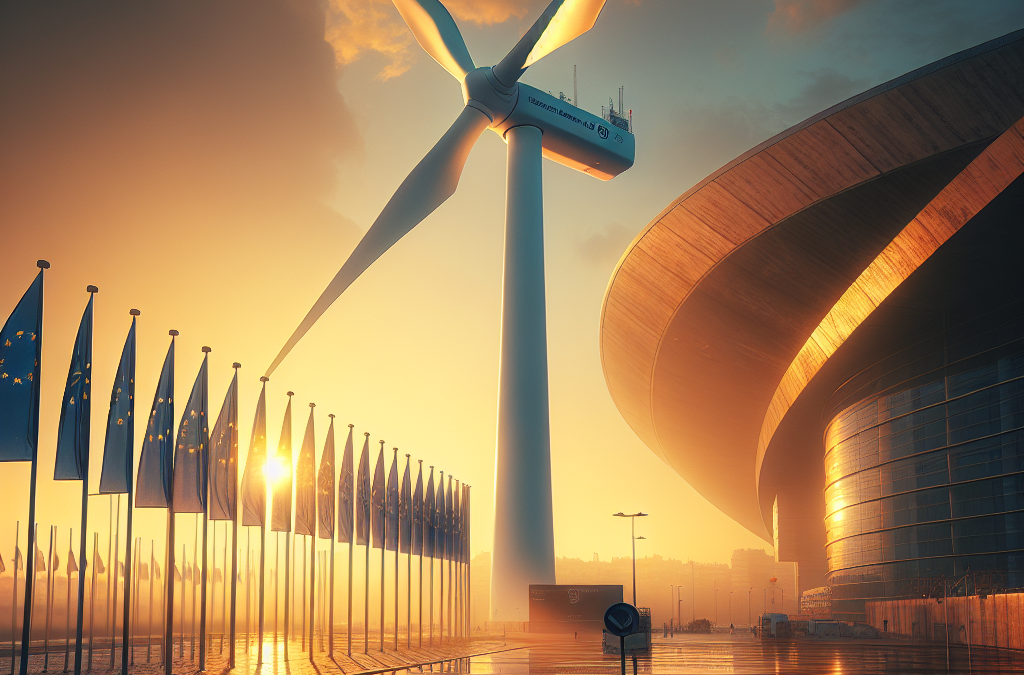
Europe currently generates around 20% of its electricity from wind energy, but electricity still represents less than a quarter of total energy consumption. In this context, the European wind sector has launched the “Madrid Call to Action”, a strategic plan aimed at accelerating electrification and strengthening Europe’s energy autonomy. The initiative was unveiled at WindEurope 2026 in Madrid, the leading global wind energy event, reinforcing Spain’s position as a key player in Europe’s energy transition.
The call comes at a time of renewed geopolitical instability, with tensions in Iran once again highlighting Europe’s vulnerability to fossil fuel dependency. The message from the sector is clear: electrification based on domestic renewable energy is the only structural pathway to guarantee energy security, industrial resilience and long-term competitiveness.
In 2025 alone, the European wind industry invested €45 billion in new capacity, underlining its commitment to scaling up deployment. With a value chain employing more than 440,000 professionals, wind power has become a cornerstone of Europe’s strategic autonomy. Yet, the sector warns that progress remains constrained by slow permitting processes and insufficient electrification across industry, transport and heating.
Spain: Industrial Benchmark and Strategic Host
Hosting WindEurope 2026 further cements Spain’s reputation as one of Europe’s wind power leaders. The country boasts a fully integrated value chain, from design and manufacturing to operation and maintenance.
Spain’s wind sector employs more than 37,000 professionals across 287 industrial facilities. As the world’s fourth-largest exporter of wind turbines, Spain combines industrial strength with technological leadership. Its 32,910 MW of installed capacity currently cover 22% of national electricity demand, helping stabilize power prices and enhance supply security.
During the opening session, AEE President Rocío Sicre emphasized the strategic importance of wind energy in today’s geopolitical climate. She stressed that energy security has become a top priority for Europe and that wind power plays an essential role in achieving it. However, she also identified one of the sector’s main bottlenecks: administrative permitting.
According to Sicre, renewable deployment must accelerate, and that requires more agile, predictable and coordinated permitting frameworks. The challenge is not about lowering standards but improving efficiency to align regulatory timelines with energy targets.
Permitting Delays: Spain’s Urgent Challenge
Spain is currently adding close to 1 GW of wind capacity per year, far below the roughly 4 GW needed annually to meet national and European targets. The limitation, industry representatives argue, is not industrial capability or investor interest, but regulatory complexity.
More than 10 GW of wind projects already hold Administrative Construction Authorization (AAC) and could be operational before 2029. Galicia leads with 3.4 GW, followed by Aragón (2.4 GW), Castilla y León (1.9 GW), Andalucía (568 MW), Cataluña (373 MW) and Asturias (305 MW). An additional 9.2 GW have secured positive environmental impact assessments and are awaiting final construction permits.
The sector is calling for the consistent application of the “Overriding Public Interest” principle to wind projects, in line with European obligations. Divergent criteria between authorities and regions, they argue, are slowing down progress at a time when speed is critical.
The Madrid Call to Action: Electrification at the Core
From Madrid, the European wind industry has urged EU institutions to place electrification at the center of energy strategy. The Madrid Call to Action outlines ten measures to accelerate renewable deployment, remove barriers and unlock demand.
Key proposals include:
- Streamlining permitting procedures, formally recognizing wind projects as being of overriding public interest.
- Optimizing renewable auctions and promoting the repowering of existing wind farms to increase output with lower territorial impact.
- Strengthening grid infrastructure manufacturing and significantly increasing investment in transmission and distribution networks.
- Boosting electrified technologies such as heat pumps and electric vehicles, while fostering industrial electrification.
- Reducing electricity taxation and simplifying long-term contracting mechanisms such as PPAs.
The event itself gathered more than 15,000 professionals, policymakers and business leaders, with over 400 speakers addressing challenges ranging from grid development and financing to social acceptance and industrial competitiveness. High-level European and national representatives, including Spain’s Prime Minister, attended the conference.
A Strategic Lever for Europe’s Energy Future
The ambitions set out in Madrid directly align with SDG 7 (Affordable and Clean Energy) and SDG 13 (Climate Action). Accelerating wind deployment and electrification is not only about decarbonization; it is about reducing exposure to volatile fossil fuel markets and strengthening Europe’s industrial sovereignty. With each additional gigawatt installed, Europe moves closer to an energy system that is cleaner, more stable and less dependent on external actors.
The message from Madrid is unmistakable: Europe has the technology, the industrial base and the workforce. What it needs now is regulatory alignment and political determination to scale up at the pace the moment demands. The coming decade will determine whether electrification becomes Europe’s strategic advantage—or a missed opportunity.
Did you know we offer training related to this topic? If you work in the wind industry or plan to enter the sector, our Basic Safety Training (BST) course is essential for technicians operating in wind turbines:
https://totalhse.com/basic-safety-training/
For professionals seeking to strengthen their technical skills in electrical, mechanical or hydraulic systems within wind energy projects, explore our Basic Technical Training (BTT) program:
https://totalhse.com/basic-technical-training/