Module
WAH


BST (Basic Safety Training)
Working at Heights
BST Working at Heights
WAH (14 h 15 min)
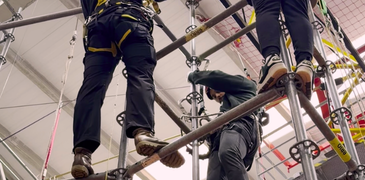
Aim: The aim of this training is to enable participants, through both theoretical and practical training, to use personal protective equipment, work safely at height, and perform basic rescue operations from height in a remote wind turbine environment.
PROGRAMME: Working at Heights
1. Introduction to the training
2. Legislation
2.1 Global legislation
2.2 National legislation
3. Harness
3.1 Pre-use inspection
3.2 Fitting
3.3 Periodic inspections
3.4 Documentation
3.5 Maintenance
4. Fall prevention
4.1 Fall prevention over fall arrest
4.2 Pre-use inspection
4.3 Correct attachment to anchor points
4.4 Correct attachment to the harness
4.5 Work positioning lanyards
5. Vertical fall arrest systems
5.1 Legal requirements
5.2 Pre-use inspection
5.3 Correct attachment and detachment
5.4 Correct use
5.5 Periodic inspections and correct documentation
6. Fall arrest: Fall arrest lanyards
6.1 Legal requirements
6.2 Pre-use inspection
6.3 Correct attachment to the harness
6.4 Fall factor
6.5 Fall indicators
6.6 Fall arrest lanyards
6.7 Approved anchor points for attachment
6.8 The importance of always using fall arrest systems
7. Dropped objects
7.1 Risks
7.2 Risk reduction
8. Self-retracting lifelines
8.1 Fall arrest systems during actual work in a wind turbine
8.2 Different allowed maximum angles
8.3 Correct attachment to the harness
8.4 Approved anchor points for SRLs
8.5 Pre-use inspection
9. Measures to prevent injury during training
9.1 Control measures and warm-up
10. Practical exercises
10.1 Vertical fall arrest systems
10.2 Fall prevention
10.3 Fall arrest lanyards
11. Risks, hazards and suspension trauma
11.1 Using the Working at Height Initial Training
11.2 Suspension trauma
Module WAH
Working at Heights
Duration:1 day
Programme WAH:Sections 1 to 17
Max. students:12 people per Edition
Prerequisites:None
Certificate Validity: 24 months
Headquarter
PREMIUM
Other centers in Spain
SELECT
SELECT
SELECT
Other centers
SELECT
SELECT
12. Emergency procedures
12.1 Contents of an evacuation kit
12.2 Preparing equipment for use
12.3 Safe and correct evacuation
12.4 Safe behaviour
13. PPE review
13.1 The individual parts of the PPE equipment
14. Rescue devices and rigging setup
14.1 The individual parts of different rescue devices
14.2 Correct use of rescue devices and slings
15. Measures to prevent injury during training
15.1 Control measures and warm-up
16. Rescue exercises
16.1 Rescue situations in wind turbines
16.2 Safe and correct rescue
16.3 Correct behavior on the ladder with PPE
17. Training review
17.1 Training review
17.2 Feedback session