Module
EFAR


EFA (Enhanced First Aid)
Enhanced First Aid Refresher
Enhanced First Aid Refresher
EFAR (14 h)
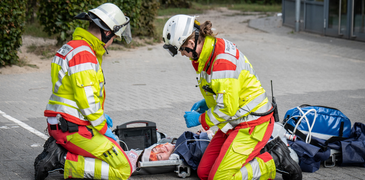
Aim: The aim of the Enhanced First Aid Refresher Training is to review build on previously gained knowledge and skills from BST First or to refresh current Enhanced First Aid Initial Training skills through theoretical and practical training so that participants can administer safe and effective enhanced first aid in the wind industry.
PROGRAMME: Enhanced First Aid Refresher
1. Introduction to the training
2. Risks/Hazards/Legislation
2.1 Risks and hazards
2.2 First aid guidelines
3. Anatomy and Physiology
3.1 The human body's life conditions, structures, functions and signs
4. Incident management, emergency response & teleconsultation
4.1 Safety awareness and personal protection equipment in an emergency situation
4.2 Management of an incident
4.3 Emergency rescue teams, emergency calls and medical teleconsultation
5. Lifesaving and Enhanced First Aid using Primary and Secondary Survey
5.1 The C-A-B-C-D-E principle
5.2 Primary survey
5.3 C: Catastrophic bleeding
5.4 A: Airway
5.5 B: Breathing – cardiopulmonary resuscitation (CPR)
5.6 C: Circulation
5.7 D: Disability
5.8 E: Environment/exposure
5.9 Secondary survey
5.10 Damage and poisoning through contact with chemical/biological substances
5.11 Eye injury
5.12 Broken bones and injuries to joints/muscles
5.13 Burns
5.14 Bites and stings
5.15 Significant injuries
5.16 Significant illness
5.17 Psychological first aid
6. Pain management and further possible medication
6.1 Application algorithm of pain management
6.2 Further possible medication
7. Enhanced first aid refresher exercises (scenario-based training)
7.1 Practice first aid techniques
7.2 Debriefing
8. Training review
8.1 Training review
8.2 Debriefing
Module EFAR
Enhanced First Aid Refresher
Duration:2 days
Programme EFAR:Sections 1 to 8
Max. students:12 people per Edition
Prerequisites:EFA / EFA-R
Certificate Validity: 24 months
Headquarter
PREMIUM
Other centers in Spain
SELECT
SELECT
SELECT
Other centers
SELECT
SELECT