Module
CSHIGH

CS (Confined Spaces)
Confined Spaces – High Risk
CS – High Risk
CSHIGH (21 h)
Aim: To train participants to work safely in high-risk confined spaces by identifying and controlling complex hazards and applying enhanced preventive measures, respiratory protection, monitoring, ventilation, emergency response, and rescue procedures.
PROGRAMME: Confined Spaces – High Risk
1. Introduction to Confined Spaces (High Risk)
1.1 Objectives and Scope
1.2 High-Risk Criteria (Probable Hazardous Atmosphere / Complex Escape / Changing Conditions)
1.3 Types and Typical Tasks (Hot Work, Complex Cleaning Operations, etc.)
1.4 Roles: Entrant, Attendant/Entry Controller, Supervisor, and Emergency Coordination
2. Regulations, Responsibilities, and Enhanced Control
2.1 Competence and Practical Assessment
2.2 Multiple Permits and Coordination of Simultaneous Work
2.3 Enhanced Supervision and Change Control
2.4 Stop Work Criteria and Incident Management
3. Working Conditions and Personnel Requirements
3.1 Demanding Conditions (Temperature, Humidity, Visibility)
3.2 Complex Access and Evacuation
3.3 Fitness for Work, Exposure Limits, and Fatigue
3.4 Planning of Occupancy Time and Rotations
4. Hazards Present (High Risk)
4.1 General Hazards
4.2 Specific Hazards: Dynamic Atmosphere, Explosion, Engulfment, Residual Energy
4.3 Enhanced Preventive Measures
5. PPE/CPE and Respiratory Protection
5.1 Selection of PPE/CPE
5.2 Respiratory Protection: Selection, Limitations, and Checks
5.3 Filtering Equipment (Criteria for Use)
5.4 Breathing Apparatus (Criteria for Use)
5.5 Escape Equipment (Where Applicable)
6. Rescue Equipment and Materials
6.1 Tripod/Davit, Winch, and Extraction Systems
6.2 Stretcher and Evacuation Systems (Depending on the Scenario)
6.3 Inspections and Pre-Use Checks
7. Signage and Area Control
7.1 Enhanced Access Control
7.2 Third-Party Control and Zone Delimitation
8. Lighting and Special Requirements (Where Applicable)
8.1 Electrical Safety
8.2 Principles of Equipment Suitable for Explosive Atmospheres (ATEX Where Applicable)
8.3 Safe Management of Cables and Portable Equipment
9. Atmospheric Control (Advanced-Operational)
9.1 Oxygen, Toxics, Flammables/Explosives (LEL)
9.2 Equipment: Multi-Gas Detector with Pump, Remote Sampling, Continuous Monitoring
9.3 Procedure: Pre-Entry Measurement, Continuous Monitoring, and Response to Trends
10. Ventilation (Advanced-Operational)
10.1 Ventilation Strategy (Supply/Extraction)
10.2 Verification of Effectiveness and Dead Spots
11. Orientation and Movement in Low or Zero Visibility (Where Applicable)
11.1 Orientation and Mobility Techniques
11.2 Search/Location and Space Reconnaissance
11.3 Obstacle Management and Safe Progression
12. Emergencies (High Risk)
12.1 Emergency Plan: Roles, Communications, and Critical Timings
12.2 Coordination with External Rescue and Transfer of Command
12.3 Initial Response Actions and Basic First Aid Focused on Asphyxia/Intoxication
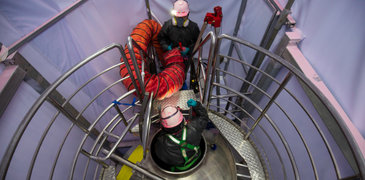
Module CSHIGH
Confined Spaces – High Risk
Duration:3 days
Programme CSHIGH:Sections 1 to 14
Max. students:12 people per Edition
Prerequisites:None
Certificate Validity: 24 months
Headquarter
PREMIUM
Other centers in Spain
SELECT
SELECT
SELECT
Other centers
SELECT
SELECT
13. Rescue Techniques and Procedures (High Risk)
13.1 Criteria: Rescue Without Entry (Preferred) vs Rescue with Entry (Only if Included in the Plan)
13.2 Extraction and Evacuation Procedures (Depending on the Scenario)
14. Practical Exercises and Assessment
14.1 Full Work Planning: Dynamic Risk Assessment + PTW with Annexes (Readings, Isolations, Emergencies)
14.2 Scenario Set-Up and Enhanced Control: Barriers, Access Control, Redundant Communications, Register
14.3 Advanced Monitoring: Remote Sampling, Stratified Measurement, and Continuous Monitoring During the Intervention
14.4 Advanced Ventilation: Supply/Extraction Configuration, Verification, and Correction of Dead Spots
14.5 Operational Use of Respiratory Protection (Where Applicable to the Course Scenario): Fitting, Checks, and Response to Alarms
14.6 Simulation of Chained Incidents: Loss of Communication / Deviation in Readings / Ventilation Failure → Stop Work, Evacuation, and Activation of the Plan
14.7 Rescue Without Entry: Extraction Using Tripod/Davit and Winch, Scene Management, and Transfer to First Aid
14.8 Final Practical Assessment: Overall Performance by Roles + Theoretical Test