Module
SS


BST (Basic Safety Training)
Sea Survival
BST Sea Survival
SS (7 h 25 min)
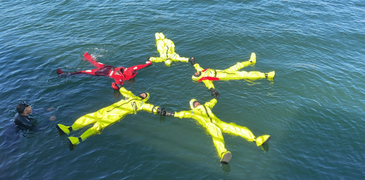
Aim: The aims of Sea Survival Initial Training are to give, by theoretical and practical training, participants the ability to act safely and responsibly and to take the correct preventive actions in all aspects of offshore operations from shore to installation vessel (or WTG) and vice versa. This is both during normal operations and in an offshore wind energy environment emergency.
PROGRAMME: Sea Survival
1. Introduction to the training
2. Safety culture and legacy
3. Cold water immersion
3.1 Exposure
3.2 Cold shock
3.3 Hypothermia
3.4 Drowning
3.5 Sea sickness
3.6 Contaminated water
4. Lifesaving appliances (LSA) and PPE
4.1 Personal LSA and PPE
4.2 Collective LSA
5. SAR and GMDSS
5.1 SAR
5.2 GMDSS and transponders
5.3 Physical actions to detection
6. Practical sea survival
6.1 Correct donning and use of LSA and PPE
6.2 Risks related to evacuation into water
6.3 Warm-up
6.4 Controlled entry into the water from TP ladder
6.5 Individual and collective swimming techniques
6.6 Correct usage of life raft
6.7 Emergency descent by constant rate descender
6.8 Summary by exercise
7. Safe travel and transfer (theory)
7.1 Safety introduction on board transfer vessel
7.2 Hazards related to different types of transfers
7.3 Transfer vessels
7.4 Safe transfer from vessel
7.5 Safe transfer from vessel to vessel and dock to vessel (theory)
7.6 Safe handling of equipment and storage
8. Awareness of motion compensated gangways (W2W Systems)
8.1 Introduction to motion-compensated gangways
8.2 Signals and alarms
8.3 Risks and unsafe behaviour
8.4 Safe behaviour during transfers
8.5 Preparation for transfers
8.6 Role of the transferee
9. Installations, vessels and WTGs
9.1 Safety on board
9.2 Person overboard procedures (POB)
10. Transfer practical
10.1 Procedure for transfer between crew transfer vessel and wind turbine generator transition
10.2 Safe transfer between crew transfer vessel and wind turbine generator transition piece
11. Training review
11.1 Training review
11.2 Feedback session
Module SS
Sea Survival
Duration:1 day
Programme SS:Sections 1 to 11
Max. students:12 people per Edition
Prerequisites:None
Certificate Validity: 24 months
Headquarter
PREMIUM
Other centers in Spain
SELECT
SELECT
SELECT
Other centers
SELECT
SELECT