Module
Puntos

Puntos
Review and Placement of Anchor Points according to EN 795 standard
Review and Placement of Anchor Points according to EN 795 standard
Puntos (7 h)
Aim: The training module Review and placement of anchor points (EN 795), has been designed to train qualified people in the choice, placement and proper review of the different anchor points used in vertical work and progression. This training is designed in accordance with the EN 795 standard.
PROGRAMME: Review and Placement of Anchor Points according to EN 795 standard
1. Review of basic OSH concepts
2. Specific regulations: EN795:2012 – CEN/TS16415 – EN959:2021 - EN365:2005
3. Basic physics concepts:
3.1 Basic concepts: Mass and Weight
3.2 Force
3.3 Load
3.4 Effort
4. Anchor Devices:
4.1 EN795:2012 Type A – CEN/TS16415 - Manufacturers and models
4.2 EN959:2021 - Manufacturers and models
4.3 EN795:2012 Type B - Manufacturers and models
4.4 Temporary anchors: Slings – Triangulation
5. Basic geology: natural supports: rocks, terrains…
5.1 Artificial supports: concrete, metal, masonry, other materials
5.2 Drilling machines: electric drills, batteries, gasoline, air pistols, tools and accessories
5.3 Drilling systems: drills, trepans, dry and wet crowns
5.4 Types of metals and steels: composition, characteristics and uses
5.5 Fixing systems: mechanical and chemical
5.6 How an anchor works
5.7 Study of regulations, test trials, certification, manufacturers, etc.
5.8 Steps to follow for the correct installation of an Anchor Point
5.9 Documentation to be issued: Installation Certificate
6.1 Regulations on lifelines
6.2 Materials used in temporary lifelines
6.3 Installation of temporary lifelines
6.4 Horizontal lifelines
6.5 Vertical lifelines
6.6 Methods for tensioning lifelines
6.7 Fall-arrest devices used on lifelines
6.8 Inspection and maintenance of lifelines
7. Drilling: Choice of suitable machine and drills (Practical lesson)
8. Drilling techniques in rock and concrete: Correct use of machinery (Practical lesson)
8.1 Installation of Mechanical and Chemical Fixing Systems
8.2 Verification of Fixing Systems with tester
8.3 Installation of Anchor Devices in the installed Fixing Systems
8.4 Labeling and Certificate
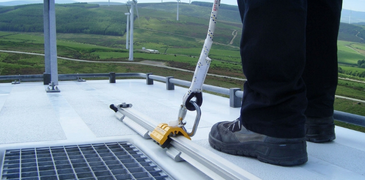
Module Puntos
Review and Placement of Anchor Points according to EN 795 standard
Duration:1 day
Programme Puntos:Sections 1 to 8
Max. students:8 people per Edition
Prerequisites:1. Knowledge about how to identify the work equipment used in the placement of Anchor Points.
2. Practical experience in the use of these PPE for work at heights.
Certificate Validity: 3 years (renewable before the expiration date by attending the updating module)
Headquarter
PREMIUM
Other centers in Spain
SELECT
SELECT
SELECT
Other centers
SELECT
SELECT