
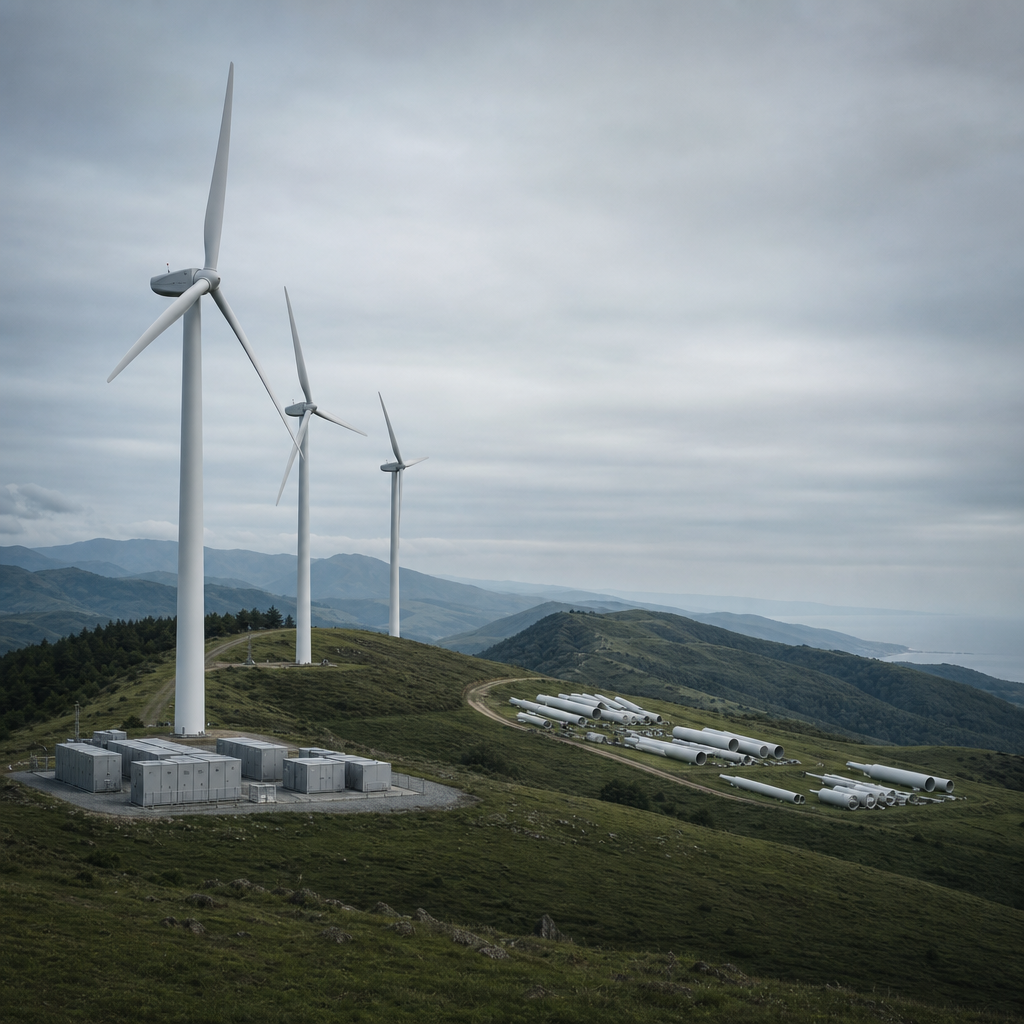
Statkraft Secures €38M to Repower Spanish Wind Farms
Across Europe, wind repowering is emerging as a strategic lever to accelerate the energy transition while minimizing environmental impact. In this context, Statkraft has secured more than €38 million under Spain’s second Circular Repowering programme (REPOTEN 2), managed by IDAE and financed through the European NextGenerationEU funds, to modernize several wind farms across the country and hybridize them with battery storage.
The selected projects, located in Galicia, Andalusia and Castilla y León, represent a total planned investment exceeding €300 million. Statkraft, Europe’s largest renewable power producer and a leading player in the PPA market, was awarded funding for all the projects it submitted, reinforcing its strategy of prioritizing wind repowering combined with energy storage.
Fewer turbines, more power
In Galicia, the company will carry out a comprehensive upgrade in the Serras Faro-Farelo wind cluster, replacing 80 turbines installed in 2005 with just 25 next-generation machines. These new units will be more efficient and significantly more productive, enabling higher clean energy output with a reduced physical footprint.
The Galician projects will also incorporate a 127 MW battery energy storage system with 254 MWh capacity, enhancing grid flexibility and supporting the integration of renewable generation. This hybridization with batteries reflects a growing industry trend, aligning wind assets with storage solutions to improve dispatchability and system stability.
In Cádiz, the La Herrería and Pasada de Tejeda wind farms, part of the Aerosur complex, will reduce their fleet from 34 turbines to a maximum of 9, while slightly increasing installed capacity. A 13 MW battery system with 38 MWh of storage is also planned for these sites.
Meanwhile, in Poza de la Sal in Burgos, the Páramo de Poza I and II wind farms, currently totaling 100 MW, will replace 130 existing turbines with just 14 modern units, dramatically improving efficiency and reducing visual and environmental impact.
Technology driving environmental gains
Thanks to technological advances over the past two decades, repowered wind farms generate more electricity with fewer machines. Beyond boosting production, modern turbines are quieter and integrate advanced bird protection systems, including radar-based detection and automatic shutdown mechanisms to prevent collisions.
Repowering allows operators to continue using prime wind locations and existing grid infrastructure while optimizing land use and minimizing environmental disturbance. It also supports digital monitoring, predictive maintenance and hybrid configurations, trends that are reshaping both onshore and offshore wind development.
A track record in wind repowering
Statkraft is already advancing its second repowering project in Spain at the Montes de Cierzo wind farm in Navarra, backed by a €100 million investment. The company has dismantled the first 44 turbines and installed 10 new ones, moving into the final phase of a project that will replace 41 turbines with just 4 new high-capacity units, alongside a battery storage system.
Its first repowering initiative in Spain was completed in 2017 at the Malpica wind farm in Galicia. The project reduced the number of turbines by nearly 90 percent, from 69 units to just 7, while doubling production to 65.9 GWh annually, enough to supply around 18,000 households.
Global and local impact
By increasing renewable output while reducing infrastructure footprint, these projects directly contribute to SDG 7, Affordable and Clean Energy, and SDG 13, Climate Action. Repowering can be compared to upgrading an old fleet of vehicles with fewer, more efficient electric models that deliver better performance with lower emissions. In energy terms, producing more power with fewer turbines represents a decisive step toward a smarter and more sustainable grid.
Statkraft’s success in the REPOTEN 2 programme confirms that wind repowering, combined with battery hybridization, is becoming a cornerstone of Spain’s renewable strategy. As older wind fleets across Europe approach the end of their design life, the question is no longer whether to repower, but how quickly and efficiently the industry can scale this transformation.
Did you know we offer training related to this topic? If you work in wind energy projects or repowering activities, you can strengthen your skills with our Basic Safety Training for wind technicians https://totalhse.com/basic-safety-training/ and our Basic Technical Training in electrical, mechanical and hydraulic systems https://totalhse.com/basic-technical-training/, designed to prepare professionals for the operational and safety challenges of modern wind farms.