
Europe Cuts Air Pollution, 2030 Goals Demand More Action
Air pollution remains one of Europe’s most pressing environmental health challenges, yet recent data confirm steady progress. According to the European Environment Agency, the European Union has achieved significant reductions in air pollutant emissions and notable improvements in air quality over recent decades. However, meeting the 2030 targets will require additional efforts across most Member States, particularly in cutting emissions of ammonia (NH₃), fine particulate matter (PM₂.₅), and nitrogen oxides (NOx).
Spain reflects this broader European trend. On one hand, the country has made substantial progress in reducing emissions and improving air quality, closely linked to the transformation of its energy system and the gradual replacement of fossil fuel technologies with renewable sources. The strong expansion of wind and solar power has played a decisive role in lowering emissions associated with electricity generation, especially SO₂, NOx, and particulate matter, pollutants directly tied to public health risks and environmental degradation. Spanish cities now rank among those with the most significant air quality improvements in recent EEA updates.
Renewables as a Structural Solution
The decarbonisation of the power sector has delivered tangible results, but future progress will depend increasingly on other sectors. Achieving the 2030 commitments will rely less on electricity generation and more on reducing emissions from agriculture, transport, and certain fossil fuel based heating uses, where the pace of decline remains insufficient.
In Spain, the main challenge lies in reducing ammonia emissions linked to livestock and agricultural activities, a shared issue across the EU. Meanwhile, transport accounts for 53.54 percent of nitrogen oxide emissions, while the residential, commercial, and institutional sector is responsible for 61.89 percent of fine particulate emissions. These figures highlight the need for deeper structural changes, including electrification and improved energy efficiency.
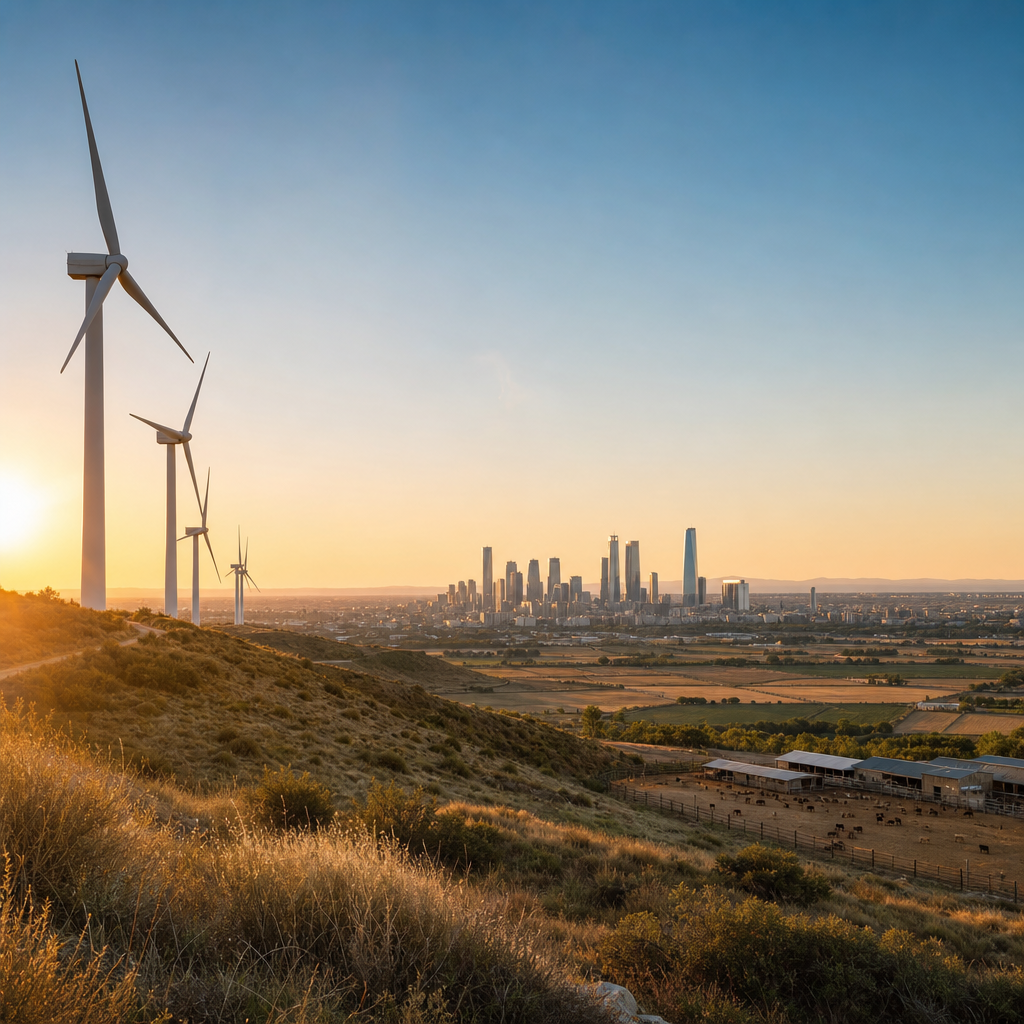
Within this context, the expansion of renewable energy, particularly wind power, stands out as one of the most effective tools to advance decarbonisation while delivering direct benefits to public health and air quality. Accelerating the electrification of demand using renewable electricity will be essential for Spain and the European Union to meet their 2030 climate and air quality objectives.
Local and Global Impact
Progress in renewable deployment directly supports SDG 7, Affordable and Clean Energy, by increasing access to reliable and sustainable power, while also contributing to SDG 13, Climate Action, through sustained emissions reductions. The health benefits associated with cleaner air are measurable and immediate, reducing respiratory and cardiovascular risks across urban and rural populations alike. In practical terms, each additional gigawatt of renewable capacity displacing fossil generation represents fewer pollutants entering the atmosphere and fewer hospital admissions linked to poor air quality.
The coming years will determine whether Europe can translate its progress in power generation into comprehensive emission cuts across all sectors. The energy transition has proven its value. The challenge now is extending its impact beyond electricity and embedding clean technologies throughout the economy.
Did you know we offer training related to this topic? If you are working in wind energy or planning to enter the sector, our Basic Safety Training course is essential for safe operations in wind turbines. For professionals involved in electrical and mechanical systems linked to renewable installations, our Basic Technical Training provides the technical foundations required to operate and maintain modern energy infrastructure safely and efficiently.