
EU Targets 46% Electrification by 2040 in New Plan
In 2024, electricity accounts for just 23% of the European Union’s final energy consumption, a figure that Brussels now wants to double within 15 years. With the publication of COM/2026/595, the European Commission has unveiled a sweeping Electrification Action Plan aimed at accelerating the use of electricity in industry, transport and buildings while cutting external energy dependence. Spain’s Wind Energy Association policy team has reviewed the 15 proposed actions, highlighting those with the greatest relevance for the wind sector.
At the core of the strategy are measures to boost demand electrification, scale up storage, strengthen the renewables framework under RED III, electrify industry and modernise grids and connection infrastructure. Together, these pillars set the direction for Europe’s next phase of energy transition.
A 46% Electrification Target by 2040
The headline measure is Action 1, which sets a target for electricity to reach 46% of final energy consumption by 2040, up from today’s 23%. This objective will be embedded in the upcoming Energy Union legislative package expected by the end of 2026. If achieved, it would effectively double the electrification rate of the European economy within a generation.
For the wind industry, this represents a structural increase in demand that will require accelerated deployment of both onshore and offshore wind turbines, along with reinforced transmission networks capable of integrating higher shares of variable renewable generation.
Storage, Grids and Industrial Electrification
Under Action 2, the Commission proposes reforming network tariffs and updating grid codes to ease the integration of batteries, thermal storage, electric vehicles, geothermal energy and heat pumps. The ambition is to expand storage capacity from around 55 GW today to 200 GW by 2030 and 500 GW by 2040, while promoting smart charging, vehicle to grid solutions and new flexibility markets. For wind power, enhanced storage and flexibility are critical to maximising system integration and reducing curtailment.
Action 4 focuses on accelerating renewables deployment by reinforcing the implementation of RED III and pushing for full transposition before summer 2027. The Commission also plans to facilitate cross border long term power contracts, create a European renewable auction database and publish guidance on industrial criteria in auctions. These measures are expected to provide greater visibility for investors and strengthen Europe’s clean tech supply chain.
Meanwhile, Action 7 places industrial electrification at the centre of decarbonisation efforts. The plan foresees mobilising major funding instruments, including a €100 billion Industrial Decarbonisation Bank and a €30 billion ETS Investment Booster, alongside new industrial heat auctions and sectoral roadmaps. Mechanisms to facilitate power purchase agreements and secure competitive electricity supply for industry are also under consideration.
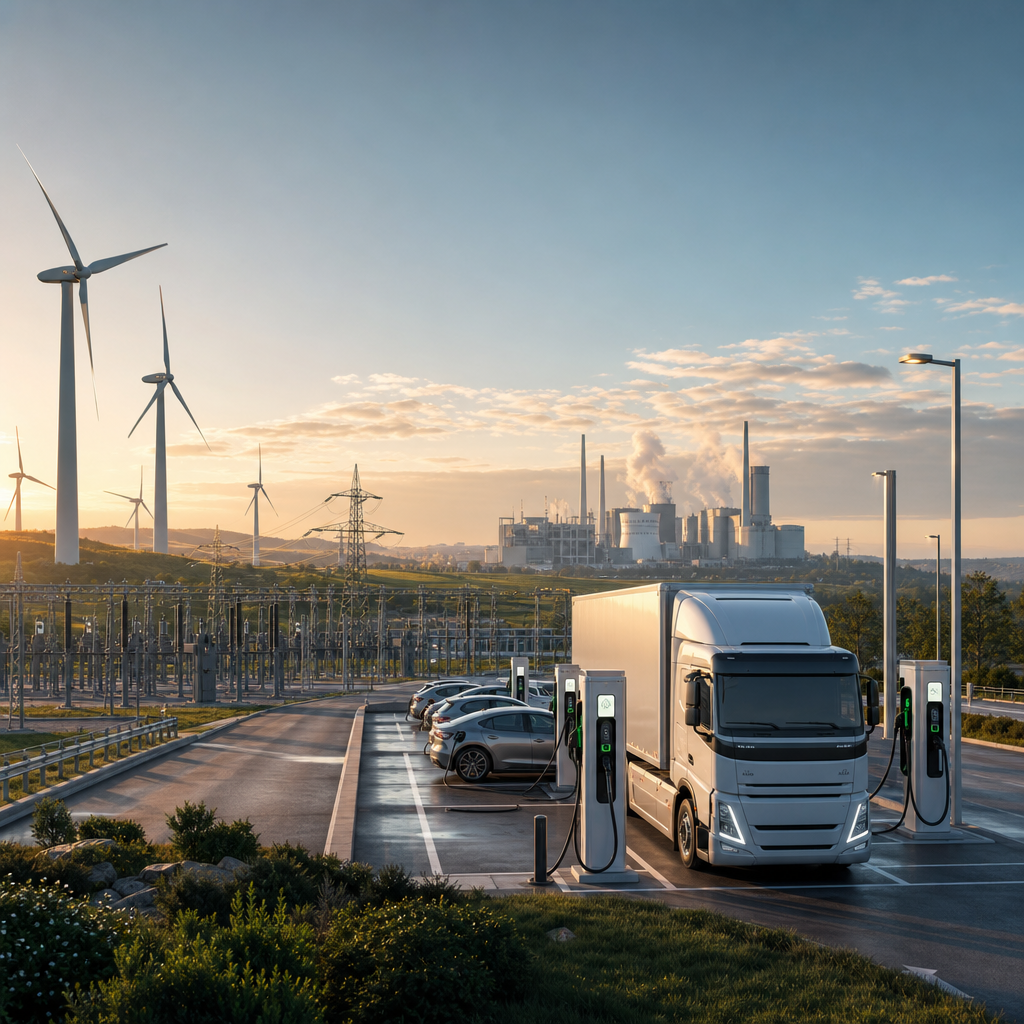
Grid and charging infrastructure upgrades are addressed in Action 10, which includes revising AFIR to accelerate deployment of heavy duty charging points, port electrification and onshore power supply for vessels, as well as updating technical standards to improve interoperability. This is essential to support a future fleet where 40% of trucks could be electrically powered by 2040.
A Systemic Transformation
Beyond these flagship measures, the plan tackles cost distortions between electricity and gas, promotes heat pump adoption, strengthens innovation in storage and clean energy technologies, and reinforces European manufacturing. It also underlines the importance of skills development and workforce mobility to ensure enough qualified electricians, installers and technical professionals are available to deliver the transition.
In global terms, moving from 23% to 46% electrification would represent one of the most profound structural shifts in Europe’s energy system since market liberalisation. By scaling renewables, storage and electrified end uses, the EU directly advances SDG 7, Affordable and Clean Energy, while accelerating emissions reductions in line with SDG 13, Climate Action. The scale of storage alone, reaching up to 500 GW by 2040, would be comparable to building several hundred large scale battery parks across the continent.
The Electrification Action Plan sends a clear signal to markets, manufacturers and project developers. For wind energy, it confirms that demand growth, grid expansion and industrial decarbonisation will define the next investment cycle. The challenge now lies in execution, permitting speed and workforce readiness. The direction is set, but delivery will determine whether Europe can truly electrify its economy at the pace required.
Did you know we offer training related to this topic? If you are involved in wind energy projects, our Basic Safety Training course is essential for professionals working on wind turbines, while our Basic Technical Training programme strengthens skills in electrical and mechanical systems crucial for electrification and grid integration. Explore more at:
https://totalhse.com/basic-safety-training/
https://totalhse.com/basic-technical-training/